
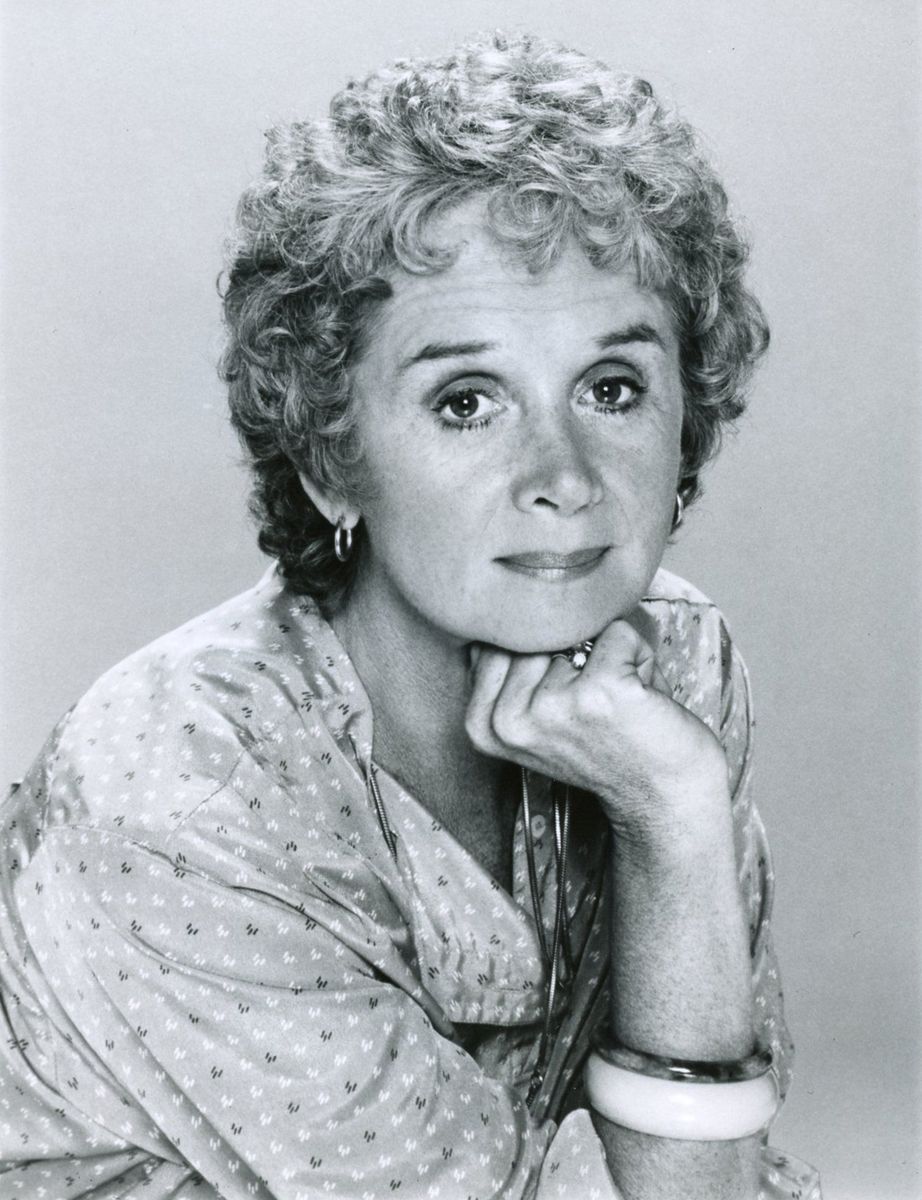
NEW YORK — Barbara Barrie, the Oscar-nominated actress whose warmth and quiet resilience made her the emotional centre of Breaking Away, died on Wednesday, 28 October, at her home in Manhattan. She was 95. Her daughter, Jane Harnick, told The New York Times that the death was medically assisted under New York’s Medical Aid in Dying Act, following a terminal cancer diagnosis. Her agent, Gary Gersh, confirmed the news to USA Today on 28 October.
The announcement closes one of the longest and most versatile careers in American acting. Across seven decades, Barrie moved between Broadway, Hollywood and prime-time television with a consistency that made her a familiar presence to successive generations of audiences — a leading lady at Cannes in the 1960s, a Tony nominee on Broadway in the 1970s, an Oscar nominee in 1980, and a sitcom regular well into her sixties. Few performers of her era were still earning Emmy nominations in their seventies. Barrie was.
THE ROLE THAT DEFINED HER
For film audiences, Barrie will always be Evelyn Stohler. In Breaking Away (1979), the beloved coming-of-age drama about cycling, class and small-town dreams in Bloomington, Indiana, she played the mother of Dave Stohler, the bike-racing-obsessed teenager portrayed by Dennis Christopher. Where the film’s young men dream loudly, Evelyn anchors the household quietly — amused by her son, protective of him, and wise about the limits life places on both of them.
The performance brought Barrie the defining honour of her film career: a nomination for Best Supporting Actress at the 1980 Academy Awards. It remains one of the most fondly remembered supporting turns of its period, not because it reaches for attention, but because it never does. Evelyn’s patience is the film’s moral weather, and Barrie plays her with a lightness that keeps sentimentality firmly at bay.
A CANNES PRIZE FIRST
Hollywood, though, was not the first to recognise her. Sixteen years before the Oscar nomination, Barrie had already collected one of cinema’s most prestigious acting honours: Best Actress at the 1964 Cannes Film Festival, for One Potato, Two Potato. The prize placed her in the front rank of screen actresses of the decade, and announced a talent equally at home in intimate drama as in the large ensemble pieces that would define much of her later work.
BROADWAY, AND A PLACE IN SONDHEIM HISTORY
The stage, however, was her first home, and she holds a permanent place in musical theatre history. In 1970, Barrie originated the role of Sarah in the original Broadway production of Company, the landmark musical by Stephen Sondheim and George Furth that reshaped what a Broadway musical could be. Her performance earned her a Tony Award nomination in 1971 for Best Featured Actress in a Musical, and a place in the original cast of one of the most celebrated musicals of the modern era.
A TELEVISION FIXTURE FOR FOUR DECADES
Television made Barrie a fixture in American living rooms. She played Liz, the wife of Hal Linden’s Barney, in the classic sitcom Barney Miller, and later spent four seasons on Suddenly Susan (1996–2000), introducing her to a new generation of viewers. The industry noticed the range: she was nominated for Emmy Awards for the 1981 television adaptation of Breaking Away, reprising Evelyn Stohler, and for Law & Order in 1992 and Law & Order: Special Victims Unit in 2003 — an awards span covering more than two decades.
Her film work moved just as easily between registers, from the comedy of Private Benjamin to Disney’s animated Hercules — the kind of credit list that belongs to an actress casting directors trusted with almost anything.
That Breaking Away should bookend her screen honours — an Oscar nomination for the film and an Emmy nomination for its television continuation — says something about the story’s hold on audiences, and about Barrie’s place inside it. The Stohlers were the film’s quiet miracle: parents who neither fully understood their son’s obsession nor stood in its way, and Barrie’s Evelyn gave that forbearance a face viewers have remembered for nearly half a century.
FROM CHICAGO TO CORPUS CHRISTI TO THE STAGE
She was born Barbara Ann Berman in Chicago on 23 May 1931, and raised in Corpus Christi, Texas — an upbringing far from the stages she would eventually command. She studied drama at the University of Texas and graduated in 1952, then built her career production by production, in the years when American acting still ran through live television, touring companies and Broadway. The discipline of that formation never left her work, which was marked throughout by precision and a complete absence of showiness.
WRITING THROUGH ILLNESS
Barrie also wrote, memorably, about her own body. Diagnosed with rectal cancer in 1994, she turned the experience into two books, Second Act and Don’t Die of Embarrassment, which brought her characteristic candour to a subject few public figures of her generation discussed openly. In 2014, she was diagnosed with idiopathic pulmonary fibrosis. That she wrote about illness with the same plain directness she brought to her roles was, in the end, of a piece with the performer audiences had watched for decades: private about everything except what might be useful to someone else.
A LONG LIFE, QUIETLY SHARED
In 1964 — the year of her Cannes triumph — Barrie married Jay Harnick, who predeceased her. She is survived by their children, Jane and Aaron. Her daughter’s role in announcing the death, speaking to The New York Times about the circumstances with straightforwardness, closed the story of a life that had been lived, by the standards of her profession, remarkably quietly and entirely on its own terms.
It is a measure of that durability that the honours kept arriving in every decade: the Cannes Best Actress prize in 1964, the Tony nomination for Company in 1971, the Oscar nomination for Breaking Away in 1980, and Emmy nominations in 1981, 1992 and 2003 — a span few actors of any generation can match.
What remains is the work: a Cannes-winning performance, a place in the original cast of a musical that changed Broadway, an Oscar-nominated mother who still defines how American film imagines patience, and decades of television in which Barbara Barrie could be relied upon to find the truth of a scene and hold it. She was 95, and she had been indispensable for most of the years in between.
Source note: This original BuzzDaily report is based on reporting by The New York Times (information provided by Jane Harnick) and USA Today (confirmation by agent Gary Gersh, 28 October 2026), with further coverage from Entertainment Weekly, People and Page Six. Career details — including the 1980 Academy Award nomination, the 1964 Cannes Best Actress prize, the 1971 Tony nomination and the Emmy nominations of 1981, 1992 and 2003 — are a matter of documented public record; the closing assessment is BuzzDaily’s own analysis. Hero photograph: Barbara Barrie as Evelyn Stohler in a 1980 ABC Television press photograph for Breaking Away, public domain, via Wikimedia Commons (file photo).