
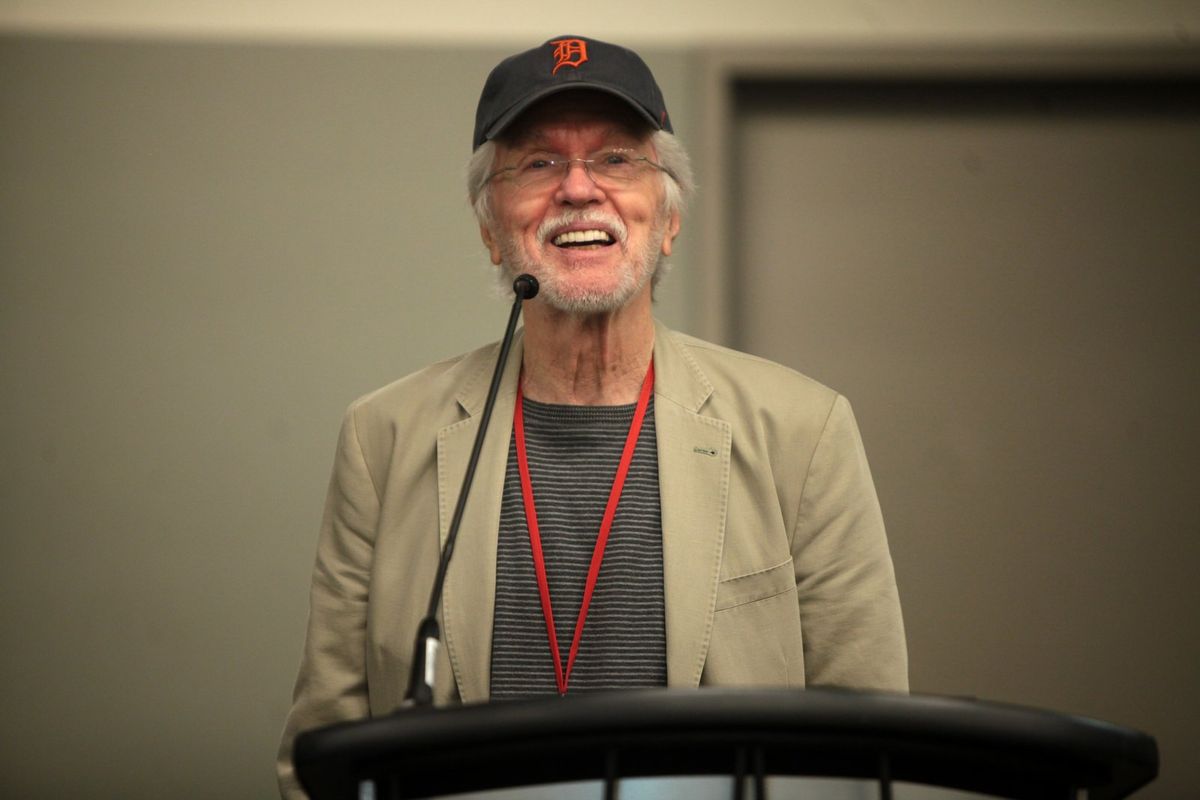
LOS ANGELES — Tom Skerritt, the Emmy-winning actor whose quiet authority anchored some of the most beloved films of the past half-century — Captain Dallas in “Alien,” Commander Mike “Viper” Metcalf in “Top Gun,” Sheriff Jimmy Brock in “Picket Fences” — died on Wednesday, 21 October 2026, aged 93. His family confirmed that he died of natural causes, in a statement shared with USA TODAY and reported by The Hollywood Reporter.
“While the world knew Tom through his remarkable acting career, we knew him for his humor, curiosity, wisdom, generosity, and the love he brought into our lives,” the family said. “He cared deeply about imagination, creativity, storytelling, service, veterans, the natural world, and helping others find and share their own voices.”
The announcement prompted an outpouring of affection from across the industry for an actor who was rarely the loudest name on a poster but was, for six decades, one of the most trusted faces in American film and television. In an era that rewarded flamboyance, Skerritt built a career — and a reputation — on understatement: the calm voice in the cockpit, the steady hand on the spaceship, the small-town sheriff who held a community, and a series, together.
DETROIT ROOTS AND AN AIR FORCE DETOUR
Thomas Roy Skerritt was born on 25 August 1933 in Detroit, Michigan, and raised in the auto city. Before Hollywood, there was service: he spent four years in the U.S. Air Force, an experience that friends and interviewers would later credit for the unforced military bearing that made him so convincing in uniform — and in command — on screen. After his discharge, he studied at Wayne State University and the University of California, Los Angeles, where he was drawn into acting.
His film debut came in “War Hunt” (1962), a Korean War drama that also featured an early appearance by Robert Redford. Through the 1960s, Skerritt worked the way character actors have always worked — steadily, in westerns and war pictures and a long apprenticeship of television guest spots — learning the trade so thoroughly that when the big roles arrived, he made them look effortless.
THE BREAKTHROUGH: ‘M*A*S*H’
The breakthrough came in 1970, when Robert Altman cast him as Captain “Duke” Forrest in “M*A*S*H,” the anarchic Korean War satire that became one of the defining films of its era. Surrounded by rising stars, Skerritt's wry, laid-back surgeon more than held his own, and the film announced a performer who could do more with a raised eyebrow than most actors could with a monologue. Altman had found his kind of actor — and Hollywood had found one it would call on for the next fifty years.
CAPTAIN OF THE NOSTROMO
In 1979, Ridley Scott put him in command of the Nostromo. As Captain Dallas in “Alien,” Skerritt received first billing — ahead of a then little-known Sigourney Weaver — and his weary, blue-collar captain became the steady center of a film that changed science fiction forever. It is Dallas who crawls into the ship's air shafts with a flamethrower, hunting the creature in one of the most nerve-shredding sequences ever filmed, and Dallas whose absence the surviving crew — and the audience — feels for the rest of the picture.
The film's most famous sequence, the chestburster scene, set the tone for everything that followed: horror grounded in ordinary people doing an ordinary job, played by actors who never once winked at the camera. Skerritt's grounded realism was central to why “Alien” still terrifies nearly five decades on — its captain behaved like a man, not a movie hero, right up to the end.
‘VIPER’ CALLS THE SHOTS
Seven years later, he was the grown-up in another phenomenon. In “Top Gun” (1986), Skerritt played Commander Mike “Viper” Metcalf, the commanding officer of the Navy's elite fighter weapons school, opposite Tom Cruise's reckless Maverick. Viper's quiet dressing-downs — and his final blessing — gave the film its spine of credibility: when Viper tells Maverick he has what it takes, audiences believed it, because Skerritt made authority feel earned rather than performed.
The years around it showed his range: the grieving, funny Drum Eatenton in “Steel Magnolias” (1989); the minister father at the heart of Robert Redford's “A River Runs Through It” (1992); a fine dramatic turn in the ballet drama “The Turning Point” (1977); and the calculating David Drumlin in “Contact” (1997), opposite Jodie Foster in one of the decade's defining science-fiction films. Directors returned to him again and again for the same reason: he never seemed to be acting at all.
THE EMMY YEARS: ‘PICKET FENCES’
Television gave him his signature late-career role. As Sheriff Jimmy Brock in David E. Kelley's “Picket Fences” (1992–1996), Skerritt was the decent, baffled center of Rome, Wisconsin, a town where the strange and the profound arrived weekly. The performance won him the Emmy Award for Outstanding Lead Actor in a Drama Series in 1993 and cemented his place in American living rooms — proof that the character actor could carry a series the way he had carried scenes for thirty years.
STILL WORKING, STILL TEACHING
Most actors of his generation had long since retired; Skerritt kept finding new chapters. In 2014, he returned to the role that made him immortal, voicing Captain Dallas once more in the video game “Alien: Isolation,” thirty-five years after the film. And in 2021, at the age of 88, he took the starring role in “East of the Mountains,” a valedictory drama about an aging doctor facing the end of his own life — a performance praised for the same qualities that had defined him since 1962: dignity, restraint and emotional truth.
Away from the camera, he gave back to the craft. In 2003, he co-founded TheFilmSchool in Seattle, dedicated to training new generations of screenwriters and filmmakers — the “helping others find and share their own voices” his family would one day place at the center of their farewell. It was, colleagues noted, entirely in character: the man who had made a career of serving the story spent his later years serving the storytellers.
Skerritt was a father of five, and had been married to Julie Tokashiki since 1998. He is survived by his wife and family, who asked that his life be remembered not only for the roles, but for the man their statement describes — humorous, curious, wise and generous, and devoted to service, to veterans and to the natural world.
WHY HE ENDURED
Why did he last six decades in an industry that discards most of its own within one? Partly it was versatility — war films, horror, comedy, melodrama, prestige television, even video games. Partly it was that famous restraint: Skerritt understood that authority on screen is quiet, that decency is interesting, and that audiences lean toward the actor who seems to be listening. Casting directors had a word for performers like him — “glue.” Films cohered around him. Stars shone brighter opposite him. Stories felt truer because he was in them.
From a Detroit childhood to an Air Force uniform, from the captain's chair of the Nostromo to the sheriff's office of Rome, Wisconsin, Tom Skerritt's career is a map of modern American screen acting — and a standing rebuke to the idea that only the loudest performances last. He never chased the spotlight. He simply showed up, told the truth, and let the work speak. It spoke for sixty years.
Source note: This original BuzzDaily report is based on the family's statement shared with USA TODAY (published via the Detroit Free Press, 23 October 2026) and reporting by The Hollywood Reporter and BusinessWorld Online (25 October 2026). Career details — including his Air Force service, his roles in “M*A*S*H,” “Alien,” “Top Gun” and “Picket Fences,” his 1993 Emmy Award, his return as Dallas in “Alien: Isolation” and his co-founding of TheFilmSchool in Seattle — are a matter of widely documented public record; the appreciation is BuzzDaily's own.