
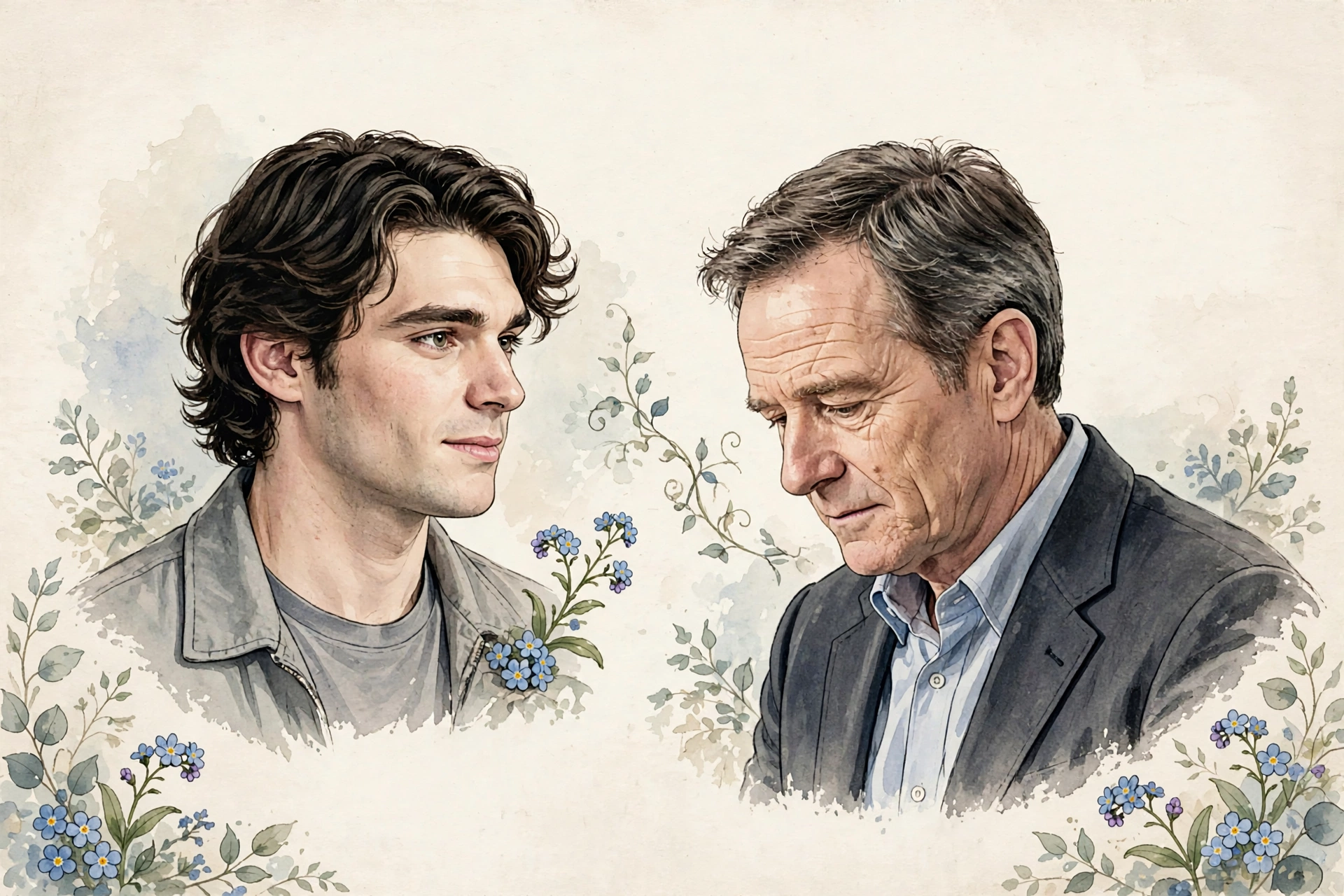
The entertainment world is mourning RJ Mitte, the actor whose warm, understated performance as Walter “Flynn” White Jr. brought humanity to one of television's darkest dramas. Mitte died Monday, October 12, at his home in Brownsville, Texas. He was 34. His representative confirmed the death to multiple outlets, and later said that Mitte died by suicide.
For audiences who followed Breaking Bad from 2008 to 2013, Mitte was more than a supporting player inside the White family. Walt Jr. was funny, wounded, loyal and increasingly clear-eyed about the damage around him. While the series pushed its adults deeper into secrecy and violence, the teenager at its center remained a reminder of what those choices cost at home.
The news prompted a rapid wave of grief from the actors who had watched Mitte grow up during the production. Their remembrances described an energetic teenager learning a difficult craft, a colleague who stayed connected long after filming ended, and an advocate who understood that visibility on screen could create opportunities beyond a single role.
BRYAN CRANSTON REMEMBERS HIS “SWEET SON”
Bryan Cranston, who played Walter White, wrote that he was in deep despair after learning of Mitte's death. He remembered first meeting the actor when Mitte was 14 and had been cast as Walt Jr. Cranston praised the enthusiasm Mitte brought to the part and the discipline with which he handled a demanding television schedule.
Cranston also reflected on the unusual relationship created when adults work closely with a teenager for years. He and Anna Gunn, who played Skyler White, offered guidance as Mitte adjusted to the pressures surrounding a hit show. Sometimes he listened; sometimes, Cranston recalled with affection, he wanted to learn in his own way. What remained constant was the gradual change Cranston witnessed as a young performer found confidence and range.
The tribute was especially painful because their friendship had remained active. Cranston said the pair had recently exchanged messages while trying to arrange lunch. There was no grand reunion planned, only the ordinary intention to catch up — the kind of plan people assume can be moved to another week. He ended the remembrance with a simple farewell: “I'll miss you, son.”
AARON PAUL AND DEAN NORRIS SHARE THEIR GRIEF
Aaron Paul, who played Jesse Pinkman, said he was heartbroken and struggling to find words. He addressed Mitte directly with love, then broadened his message to people who may be in pain, reminding them that isolation can distort what support is available. It was a brief statement, but one that treated the circumstances of Mitte's death with compassion rather than spectacle.
Dean Norris, remembered by viewers as Hank Schrader, described Mitte as a sweetheart and recalled looking out for him when he was a young actor on set. His response captured the family structure that often develops during a long-running series: Norris was not Mitte's television father, but still felt a protective responsibility toward the teenager working among adults.
Those reactions feel different from routine industry statements because Breaking Bad covered nearly all of Mitte's adolescence. The cast met him before the show became a cultural phenomenon and remained present as awards, attention and adult life arrived around him. Their memories are therefore not only about a colleague's work; they are about a young person whose development they saw at close range.
A CAREER THAT CHANGED DISABILITY REPRESENTATION
Mitte lived with cerebral palsy, as did Walt Jr., and his casting gave the series a layer of authenticity still uncommon on American television when the pilot was made. Yet he consistently resisted being reduced to a diagnosis. The character had opinions, jokes, loyalties and frustrations that belonged to him as a person, not as a lesson for other characters.
That distinction became central to Mitte's public work. He used the visibility created by Breaking Bad to argue for fuller representation of disabled people in film and television — not merely more appearances, but more varied roles and more access to employment. He served as an ambassador for United Cerebral Palsy and Shriners Children's, and was president of The Mitte Foundation, supporting philanthropic and community projects.
His family's statement emphasized that he turned personal experience into a platform for awareness and inclusion. The achievement was practical as well as symbolic. A disabled teenager appeared in a defining prestige drama, worked throughout its complete run and then continued into film, television and advocacy. For younger performers watching, his career made participation in the industry feel less theoretical.
WORK BEYOND BREAKING BAD
After the AMC series ended, Mitte continued to take roles across genres. His television credits included Switched at Birth, The Guardians of Justice and Now Apocalypse. In the 2021 drama Triumph, he played a high-school student with cerebral palsy who wants to compete as a wrestler, a role that again joined a character's physical reality to a wider story about ambition and self-definition.
His film work included The Oak Room, The Unseen, Westhampton and the newly released Talking to Strangers. USA Today reported that his last public appearance came at the latter film's Los Angeles premiere on September 30. The project centered a character with cerebral palsy, continuing Mitte's effort to make disability part of stories about relationships and social life rather than confining it to medical narratives.
He had also spoken warmly about the bonds created on Breaking Bad. Years after the finale, he described Cranston and Gunn with the respect ordinarily reserved for family. That connection helps explain why the cast's tributes have landed so heavily with viewers: the affection visible in their words was sustained after the production stopped giving them a reason to be in the same room.
WHY THE LOSS RESONATES
Television audiences met Mitte as a teenager and watched him grow into adulthood in public. That passage gives this loss an unusually intimate dimension for fans, many of whom associate Walt Jr.'s breakfasts, jokes and moral clarity with years of their own lives. The grief is not the same as that of family or friends, but it is rooted in a real history of attention.
It is also important that Mitte's death not eclipse what he built. His legacy includes a memorable performance in a landmark series, years of steady work afterward and persistent advocacy for people too often treated as an afterthought in casting. He showed that representation can be ordinary, specific and dramatically essential all at once.
In the US, call or text 988 to reach the Suicide & Crisis Lifeline. In the UK and Ireland, Samaritans can be reached free at 116 123, at any time.
BuzzDaily extends its condolences to Mitte's family, friends and colleagues. The tributes from Cranston, Paul and Norris speak to a life that mattered far beyond one character: a talented actor, a committed advocate and a young man remembered with deep affection.